Did You Know? The Narra Tree Is the Philippines' National Tree
A Symbol of Strength, Resilience, and Filipino Heritage
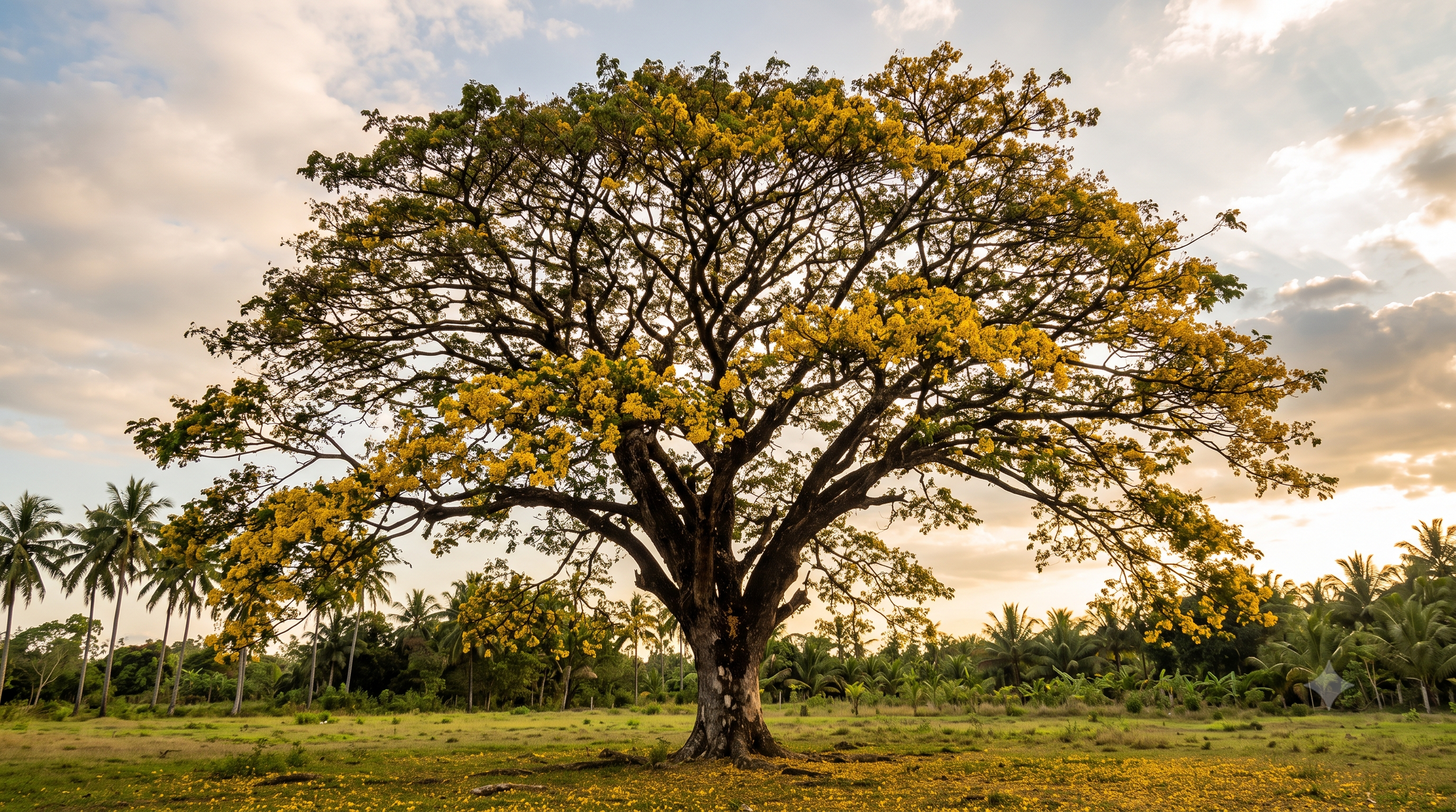
When people think of iconic Philippine trees, the Narra (Pterocarpus indicus) stands above the rest. Declared the National Tree of the Philippines in 1934 through Proclamation No. 652, the Narra represents the country's strength, resilience, and enduring natural heritage (Official Gazette of the Republic of the Philippines, 1934).
Native to the Philippines and other parts of Southeast Asia, the Narra is admired for its impressive size, graceful spreading canopy, and clusters of golden-yellow flowers that bloom seasonally. Mature trees can reach heights of up to 30 meters, providing shade, reducing urban heat, and supporting healthier outdoor environments (Fernando et al., 2008).
Beyond its beauty, the Narra plays an important ecological role. Its flowers attract pollinators such as bees, while its canopy provides habitat and shelter for birds and other wildlife. Like many native tree species, it also contributes to carbon sequestration, improves air quality, helps stabilize soils, and supports biodiversity, making it an essential component of sustainable landscapes (DENR-BMB, 2020).
Historically, Narra wood has been one of the Philippines' most valued hardwoods because of its exceptional strength, durability, and rich reddish-brown color. It has long been used for high-quality furniture, flooring, cabinetry, and traditional Filipino craftsmanship. Due to extensive harvesting in the past, the species is now protected, highlighting the importance of conserving mature Narra trees and promoting the planting of native species for future generations (DENR Administrative Order No. 2007-01).
At Native Ground, we believe native trees like the Narra are more than landscape features—they are living symbols of our country's natural heritage. Whenever site conditions allow, incorporating native species into landscapes strengthens biodiversity, supports local wildlife, and creates outdoor spaces that are both beautiful and ecologically resilient.
Protecting native trees today helps preserve the landscapes, ecosystems, and natural heritage that future generations will inherit.
References
Department of Environment and Natural Resources – Biodiversity Management Bureau. (2020). Philippine Biodiversity Conservation. https://bmb.gov.ph
Department of Environment and Natural Resources. (2007). DENR Administrative Order No. 2007-01: Establishing the National List of Threatened Philippine Plants and Their Categories. https://denr.gov.ph
Fernando, E. S., Suh, M. H., Lee, J., & Lee, D. K. (2008). Forest Formations of the Philippines. ASEAN-Korea Environmental Cooperation Unit.
Official Gazette of the Republic of the Philippines. (1934). Proclamation No. 652, s. 1934: Declaring the Narra as the National Tree of the Philippines. https://www.officialgazette.gov.ph